Anyone can identify hundreds of pieces and describe details about them, even attaching personal meaning to them. Our task as music educators is to help students understand and appreciate what they are hearing.
Thursday, November 26, 2015
Development of Perceptive Listening
The auditory sense develops remarkably early in children. Infants can differentiate pitches and identify their mother's voice at birth. During the babbling phase, babies demonstrate their ability to hear pitches by matching them to a certain extent. Children as young as three months can match and sustain pitches, and gain a sense of musical phrase as young as six or seven months. By eight months, they generally have the sense of a melody. By preschool ages, children have a vocabulary to describe what they hear. The concepts that develop early include tone color, dynamics, tempo, and style, and later comes pitch, rhythm, and form around the age of four.

Friday, November 6, 2015
Barred Orff Instruments
Barred Orff Instruments are wooden xylophones or metal metallophones and glockenspiels with bars of different lengths that produce different pitches when struck with mallets. The bars can be removed by a teacher so that children don't play the wrong pitches by accident during the lesson. They are placed in front of the player with the larger bars to the left and the smaller bars to the right, with the player sitting cross-legged or on their knees. The mallets are held comfortably, like a toothbrush. Hand-eye coordination is critical, and children should be encouraged to pull out the sound as opposed to hammering it in to get the best resonance. A lesson with these instruments could include having the children play a simple drone on two notes, probably the tonic and dominant, and then having them play different rhythms with those pitches. They can play an ostinato with one hand, them eventually two hands. A combination of ostinati can create colorful textures that engage children and work on their listening skills by playing in an ensemble.


Non-Pitched Instruments Continued- Skins and Metals
Skins
Hand Drum- Held at the rim and struck on the head with the other hand or a mallet. This is useful for keeping pulse while playing rhythm patterns.
 Bongo Drums- A pair of drums, usually connected by a piece of wood, and played with the fingertips, the palms, and the thumbs to produce different timbres and volumes.


Triangle- Held by a string and struck with a metal or wooden stick, it makes a "dinner bell" sound.


Gong- Flat brass instrument that is struck with a mallet to create a big resonating sound that children enjoy.

Cowbell- Produces open, lower sounds when struck with a mallet near its opening, and higher sounds with struck by the handle.

Double Iron Agogo Bells- Two different sized iron bells which sound at two different pitches when struck with a mallet. They are good for working with polyrhythms.

Hand Drum- Held at the rim and struck on the head with the other hand or a mallet. This is useful for keeping pulse while playing rhythm patterns.


Conga Drum- A long upright drum, shaped like a barrel. A wide range of timbres can be produced by striking the center, edge, or even the sides with either the palm, fingertips, or even sticks.

Djembe Drum- An instrument found in Ghana, this drum has a wide head and a narrow base. It is played with the fingers and palms, often in groups.

Goblet Drum- Middle Eastern instrument with a wide head and narrow base, about eighteen inches high, played with the fingertips or palm.

Timpani- Similar to a symphonic timpani, and is usually tuned to tonic, dominant, or subdominant. They come in various sizes.

Metals
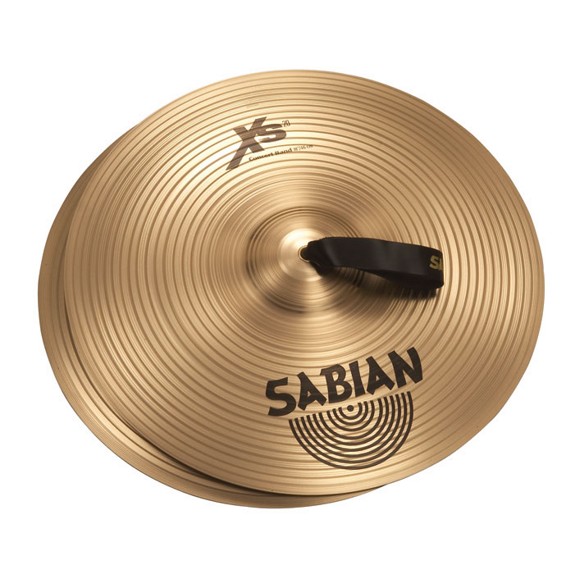
Cymbals- Two concave metal disks, played by striking or rubbing together. Children enjoy the crashing sound they can make.
Finger Cymbals- Smaller cymbals that can be attached to the middle finger and thumb, they can produce either muted or resonant sounds.


Tambourine- Drum head with metal disks attached to the rim. Can be struck or shook.

Jingle Bells- Small bells on a plastic ring that can be played by shaking. Children enjoy the joyful, Christmas like sound they produce.


Double Iron Agogo Bells- Two different sized iron bells which sound at two different pitches when struck with a mallet. They are good for working with polyrhythms.
Non-Pitched Instruments
Non-pitched instruments are rhythm instruments and they are generally the first instruments a child will play. They are easy for them to pick up quickly because they usually only involve a striking or a shaking motion, which they have been able to do since their first stage of development. These instruments provide a wide range of timbres that are perfect for improvisation with young children. These are the families of non-pitched percussion instruments.
Gourds
Maracas- From Latin America, these are dried gourds with seeds inside, played by shaking.

Sticks- Played by striking one stick against the other. Rhythm sticks with ridges can be rubbed together to produce a different sound. Young children can use them to play accurate rhythms.


Gourds
Maracas- From Latin America, these are dried gourds with seeds inside, played by shaking.

Woods
Sticks- Played by striking one stick against the other. Rhythm sticks with ridges can be rubbed together to produce a different sound. Young children can use them to play accurate rhythms.

Claves- Thicker sticks, played by cupping one in the hand to make a resonating chamber in the hand and striking it with the other. This playing position could take some development to master. They are typically used in Latin rhythms.
Woodblock- Partially hallowed block of wood that produces a resonant sound when stuck with a mallet. If it has ridges, it can also be rubbed with a mallet.

Sandblocks- Two blocks of wood covered in sandpaper that make a swishing sound when rubbed together. They are good for feeling the pulse of a meter, and appeal to children because of their unique timbre.

Slit Long Drum- A box shaped drum with slits in it producing lower and higher sounds depending on the length of the slits. Children are intrigued by the resonant quality.

Guiro- Ridged instrument played by rubbing with a wooden stick. It helps develop rhythm and physical coordination in children.
Body Percussion
Body percussion can be viewed as a musical instrument, and used as a precursor to other musical instruments. It involves clapping, slapping, tapping, snapping, stamping, and patting. It is very fun for the children and gets them up and moving during the lesson. It also has the advantage of producing different timbres, allowing for more creativity. It improves rhythm skills as it is so good for internalizing rhythms. This makes it a good tool for preparing children to play both non pitched rhythm and barred instruments. If a child learns a rhythm through body percussion, they have the feeling of the rhythm inside them before they even start playing, which makes it easier to concentrate on things like pitch and technique. A child can pat the rhythm on their legs, then when they play it on the xylophone, they can much more easily figure out the notes because they don't have to think as hard about the rhythm.
Development in Ability to Play Instruments
A child's ability to play instruments is closely related to their physical development. While rhythmic skills develop as early as the first year of life, the muscle coordination required for playing an instrument doesn't come till much later. Something as simple as playing a short melody on the piano requires enough motor skills and coordination to use the eyes, ears, and muscles in the fingers, hands, and forearms, all in tandem.
This is the developmental sequence for Playing instruments:
Children of less than two years can rock, nod, and sway to a beat. They have the ability to grasp objects, making them able to play rattles and jingle bells.
From ages two to three, children start having short periods of rhythmic regularity. This gives them the ability to play the hand drum and rhythm sticks.
From three to four, children have longer periods of rhythmic regularity, a sensitivity to pulse, and can sway their arms. They can now play the claves, woodblock, tambourine, guiro, maracas, gong, cowbell, and play the rhythm sticks by rubbing them.
From five to six, children start to be able to maintain a pulse, alternate their hands, and have basic eye-hand coordination. This allows them to play the finger cymbals, bongo drums, timpani, cymbals, triangle, and even the keyboard with one hand.
From seven to nine, children have developed eye-hand coordination. This allows them to play a wide range of things, including different pitched instruments such as the xylophone, the keyboard with both hands, the recorder, and the autoharp.
From age ten to twelve, eye-hand coordination has become much easier, as well as finger flexibility and control of the breathing apparatus. They can now play melodies on the xylophone and keyboard, more notes on the recorder, chords on the guitar, and even orchestral winds and brass.
Thursday, November 5, 2015
Teaching Notation for Reading and Writing Rhythms
Sound before symbol is always how rhythm should be taught, but eventually there needs to be a connection to notation.
Dalcroze uses "dash-a-note" to begin to introduce rhythm notation. Children can draw horizontal dashes demonstrating what they hear and feel. The longer the dash, the longer the sound. These dashes are eventually converted into notes.
Kodaly starts notation by only writing stems instead of the stem with the head. This allows for quick notation because the students don't have to take time to fill in the head, so more rhythms can be taught in a class period. Teachers can use popsicle sticks, rhythm sticks, or wooden dowels to demonstrate these stems as well.
During kindergarten, rhythm notation should be mainly experimental. However, by 1st grade, students should be able to match rhythms to different representations of the notation.
Subscribe to:
Posts (Atom)